
Vendors without a single owner
When packing, transport, and site each have a different inbox, the cargo falls in the gap.
Project Logistics Management
Engineering, vendors, and logistics coordinated by one accountable line — site supervision and documentation included, so nothing is lost between the plan and the quay.
The Problem
When packing, transport, and site each have a different inbox, the cargo falls in the gap.
The lift plan is only as good as the person holding it on the ground.
Method statements, permits, and as-builts fail when they are nobody's job.
A schedule that ignores the calculation will meet the calculation the hard way.
The Solution
How Project Logistics Management works
Sequence, assets, and windows managed as part of the same calculation as the lift.
Fabricators, hauliers, and site crews execute one specification — not three versions of it.
The drawing is present when the cargo moves. We stay with the job.
Studies, method statements, and records in one pack, ready for client and class.
How we work
Heavylift fails when the cargo is treated as a booking. We start with stress points, stability curves, and a packing design that can survive open water — then we execute against that blueprint.
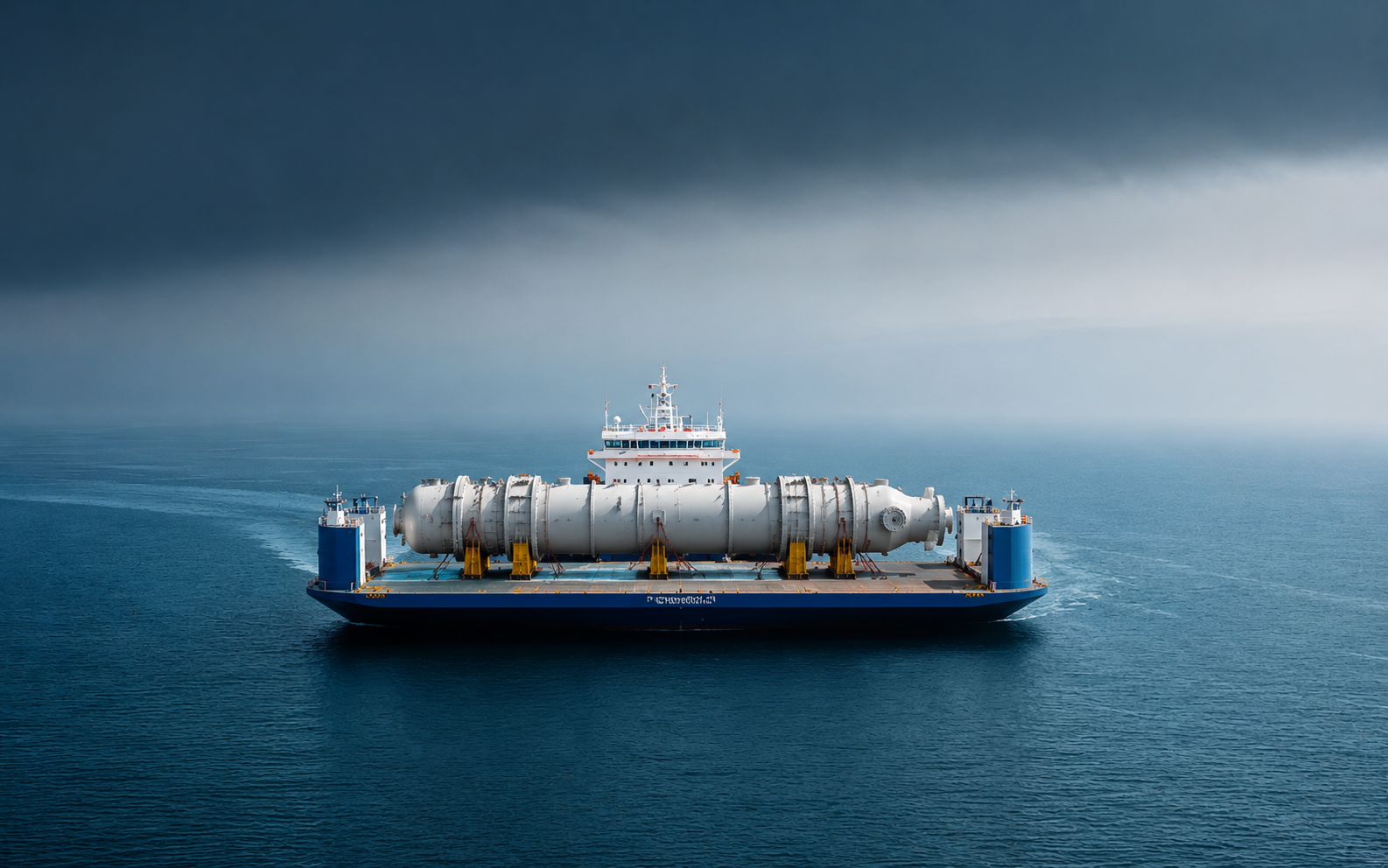
“Where others see tonnage, we see a blueprint. The move is designed before a crate is lifted.”
OOG
Out-of-gauge cargo engineered, not forced into a box
4
Disciplines under one standard of precision
Disciplines
Before a single crate is lifted, our marine engineers calculate stress points, stability curves, and load paths. It's the invisible math that keeps a 200-tonne transformer sitting still in open water.
OOG
Out-of-gauge cargo
ODC
Over-dimensional loads
Tell us about the cargo, the route, and the constraints. We start with engineering, not a booking note.
Trusted across the GCC for OOG and ODC cargo movement.